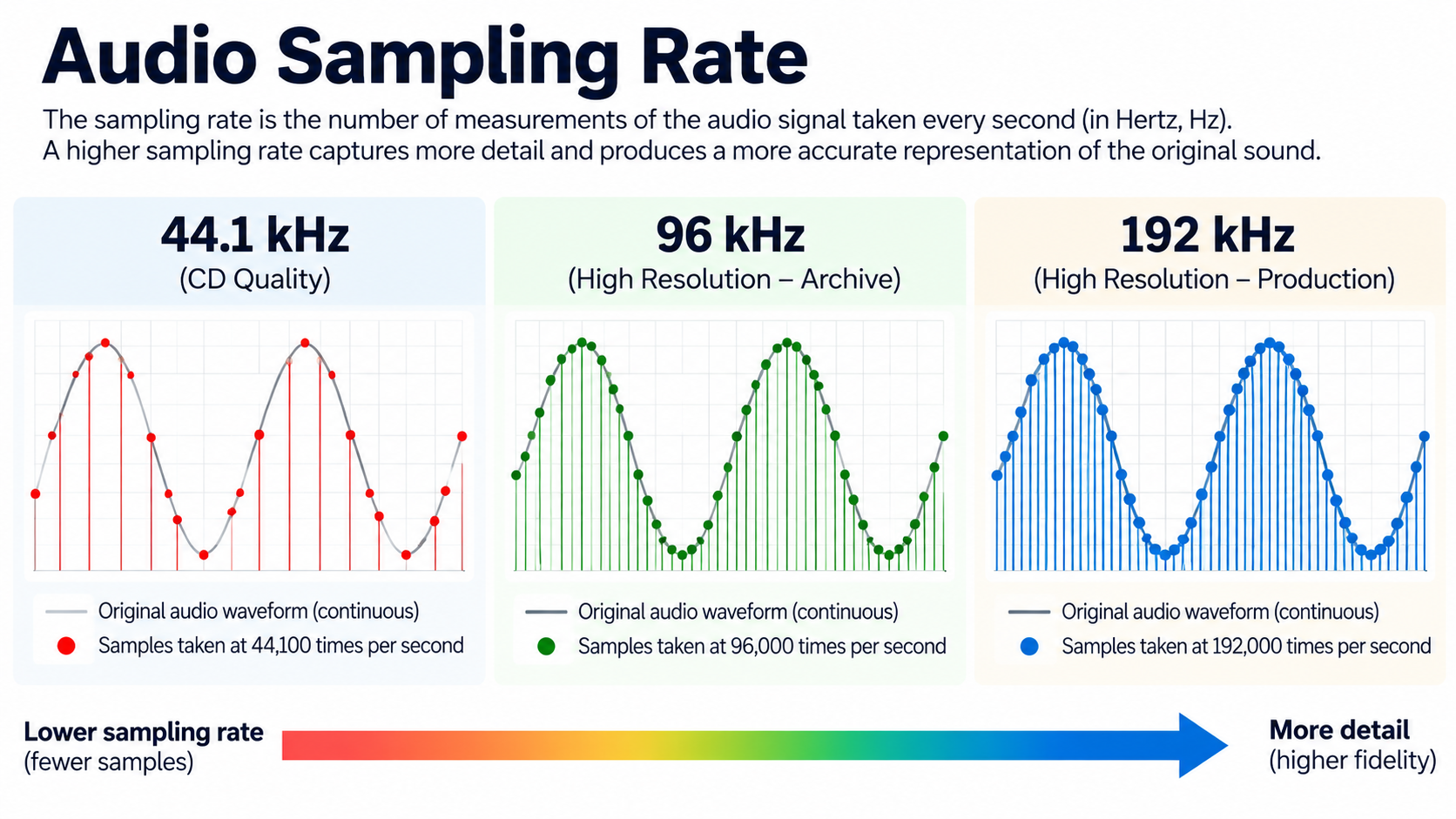
Sampling rate
How Often the Signal Is Measured
Sampling rate is expressed in kHz. Different projects may use 44.1 kHz, 48 kHz, 96 kHz or higher rates depending on the source and intended use.

Understanding how ageing audio recordings are assessed, digitised, quality controlled and preserved as high-quality digital files for future access.
Magnetic audio recordings can contain irreplaceable music, interviews, oral histories, broadcasts, research material and family memories. Preservation begins by understanding the original medium, its condition and the recording itself.
This guide brings together our key Knowledge Centre articles covering analogue audio digitisation, sampling rate, bit depth, channel configuration, WAV and BWF, tape deterioration, tape baking, digital preservation and quality control.
Identify the format, condition and recording configuration before playback.
Use appropriate professional playback and analogue-to-digital conversion.
Check channels, levels, sampling rate, bit depth and file integrity.
Maintain high-quality masters with suitable access derivatives.
Analogue audio digitisation converts the continuous electrical signal from an original recording into digital data. The quality of the result depends on the source, playback system, signal path and capture specification.
Good preservation practice aims to capture the recording faithfully rather than simply making a convenient listening copy.
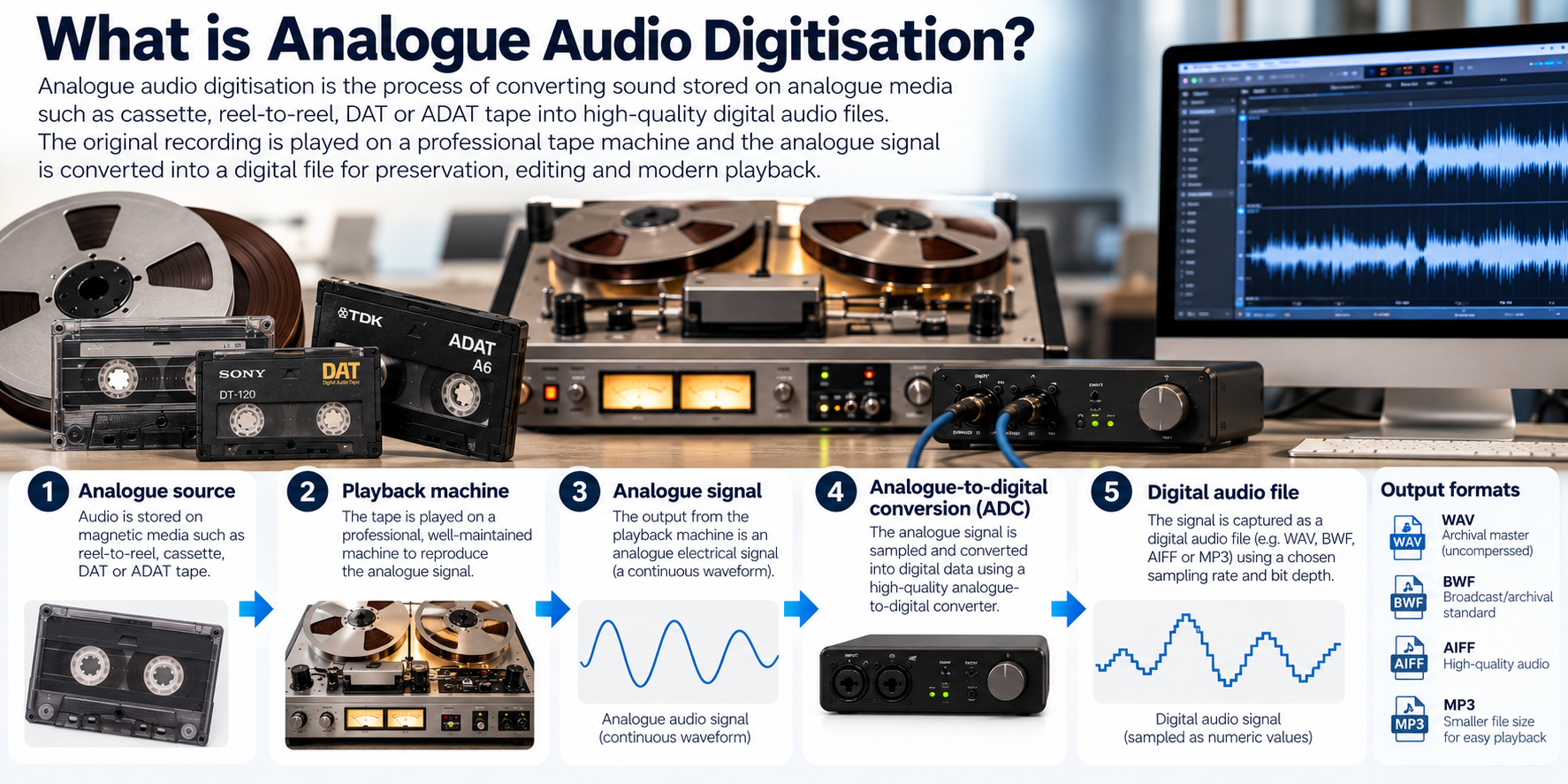
Two of the most important technical choices in digital audio are how often the signal is sampled and how precisely its amplitude is represented.
Sampling rate is expressed in kHz. Different projects may use 44.1 kHz, 48 kHz, 96 kHz or higher rates depending on the source and intended use.
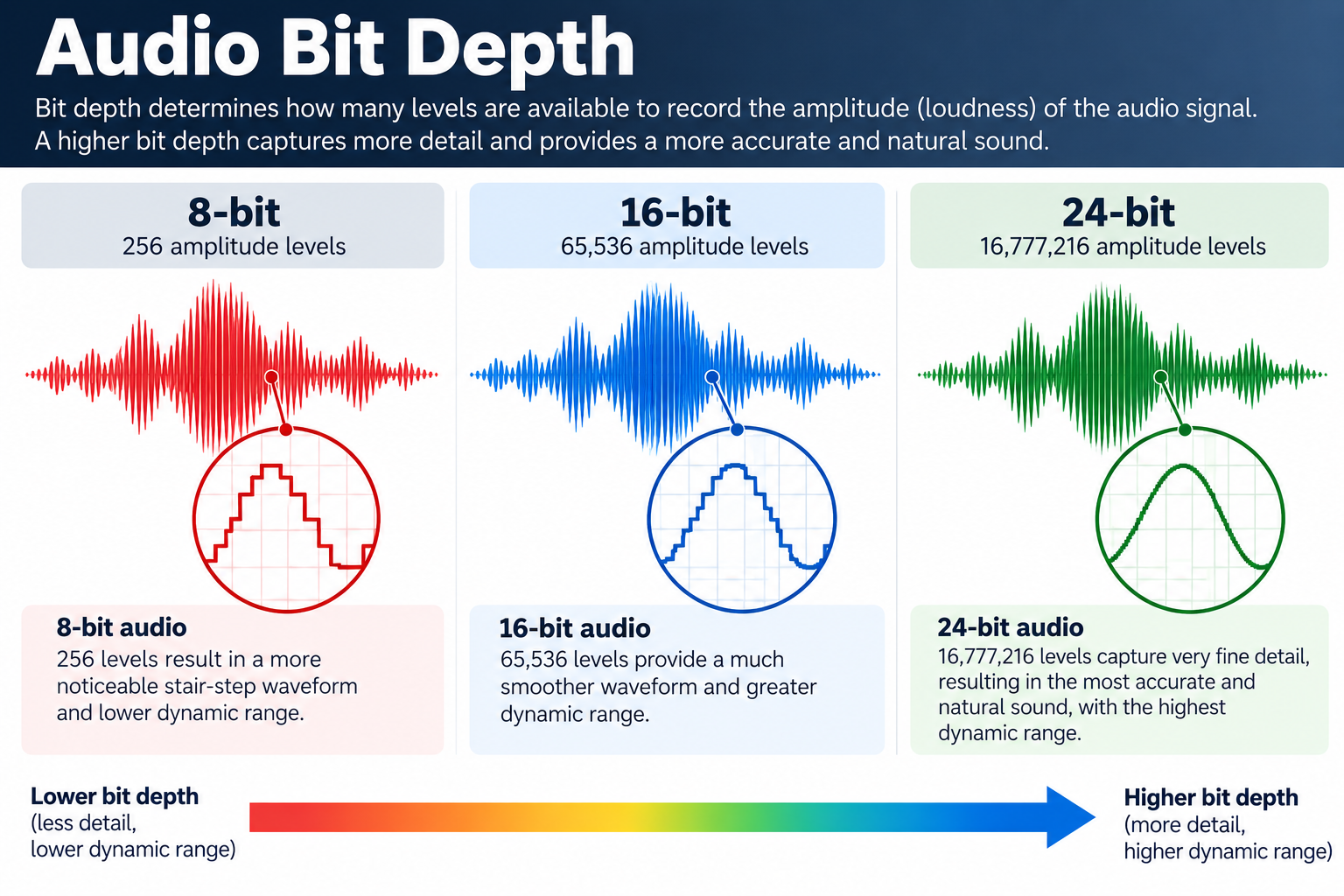
Bit depth determines the number of possible amplitude levels. Professional preservation workflows commonly use 24-bit capture to provide substantial dynamic range and headroom.
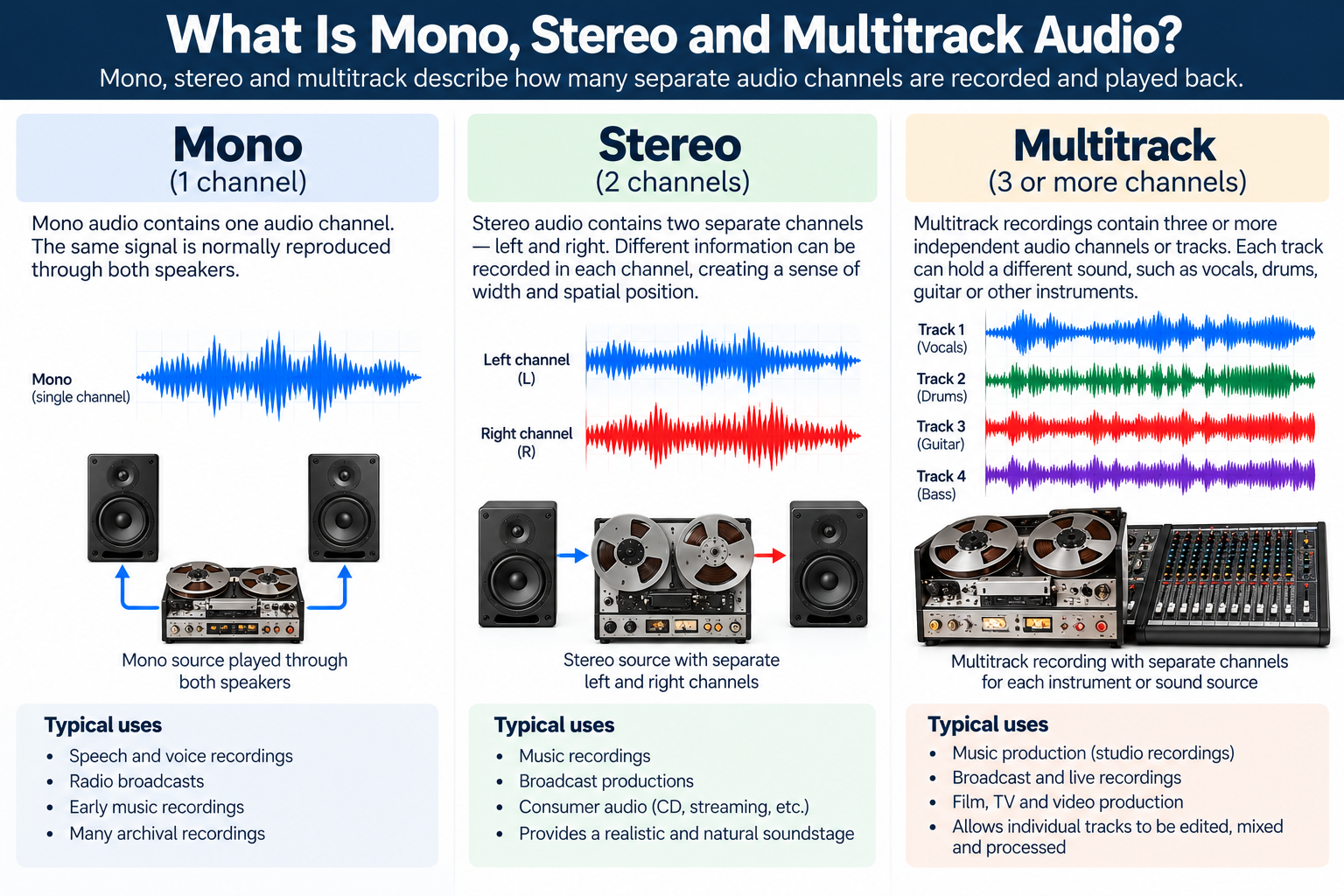
The original channel configuration should be understood and preserved. A mono recording should not be treated as stereo, and multitrack material may require each track to remain independently accessible.
Digital preservation is more than converting a tape into a file. A preservation workflow considers the capture specification, file format, naming, metadata, storage, backups, integrity and future access.
For archival projects, uncompressed PCM WAV or Broadcast Wave Format (BWF) is commonly used for high-quality preservation masters, with access copies created separately when required.
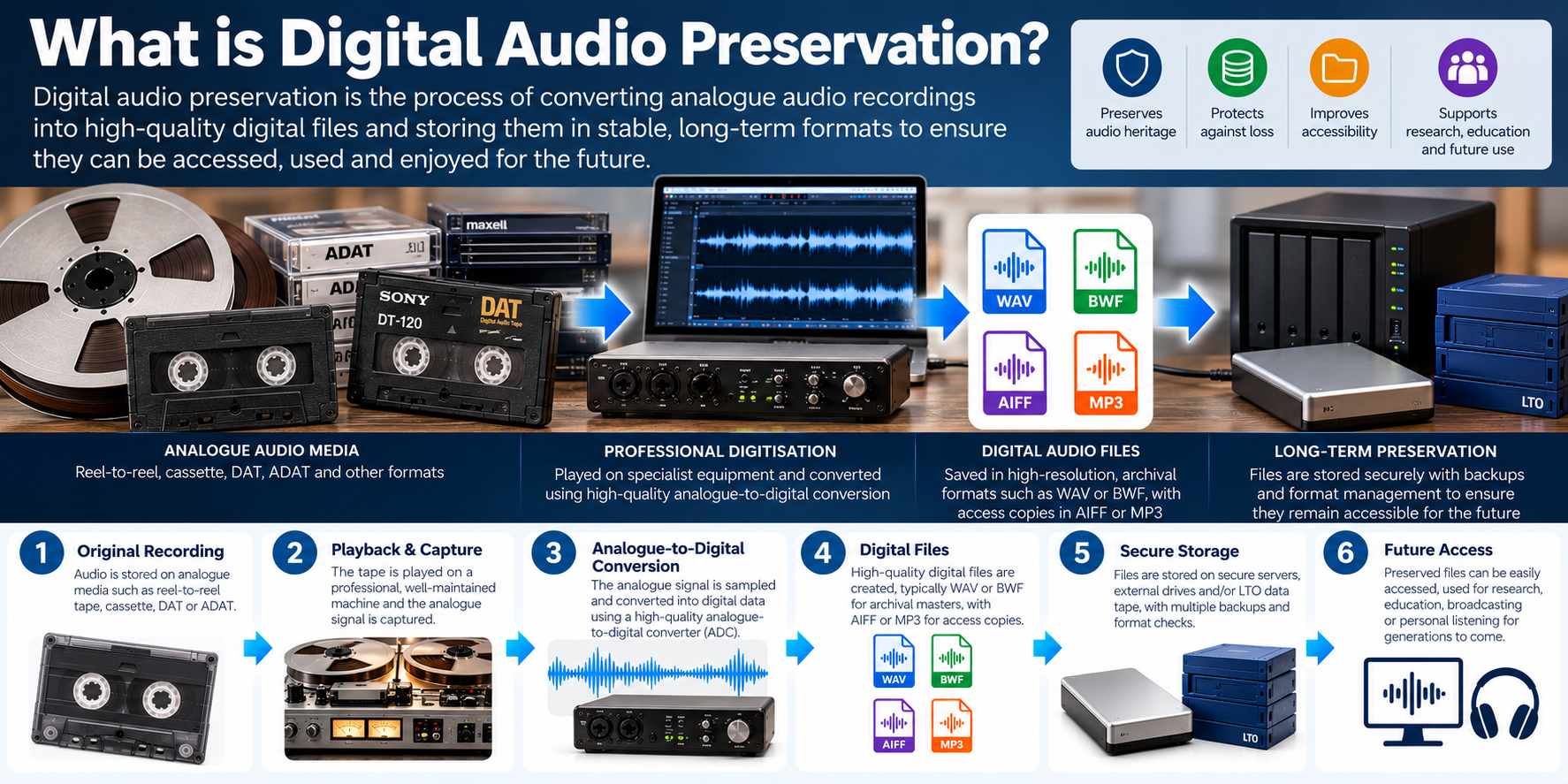
WAV is a widely supported container for uncompressed PCM audio. Broadcast Wave Format (BWF) extends WAV with fields that can support professional metadata and broadcast/archive workflows.
Ageing magnetic tape can develop physical and chemical problems that affect playback. Assessment should come before attempting to play vulnerable recordings.
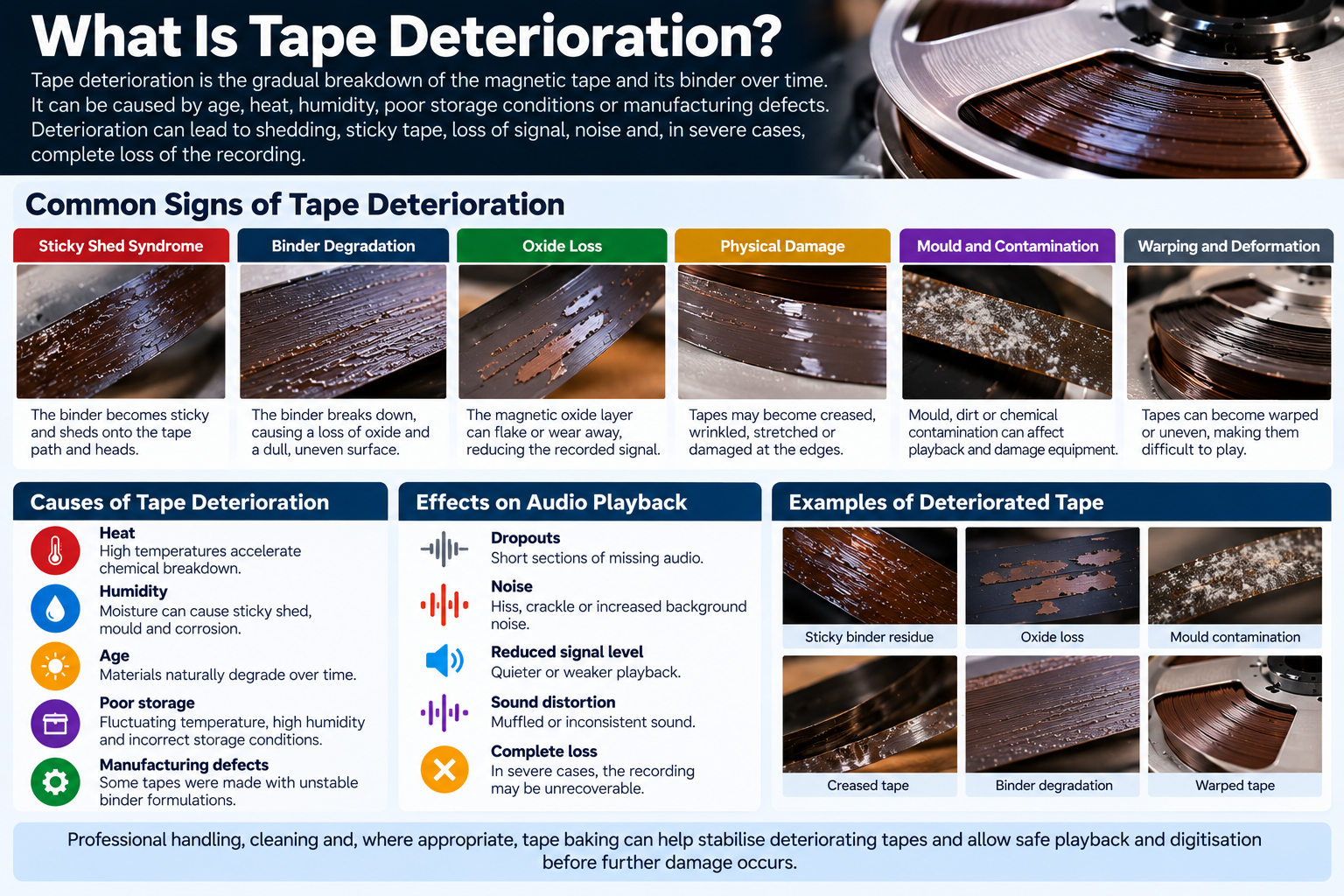
Heat, humidity, age, poor storage, contamination and unstable binder formulations can contribute to sticky shed, oxide loss, mould, warping, shedding and other playback problems.
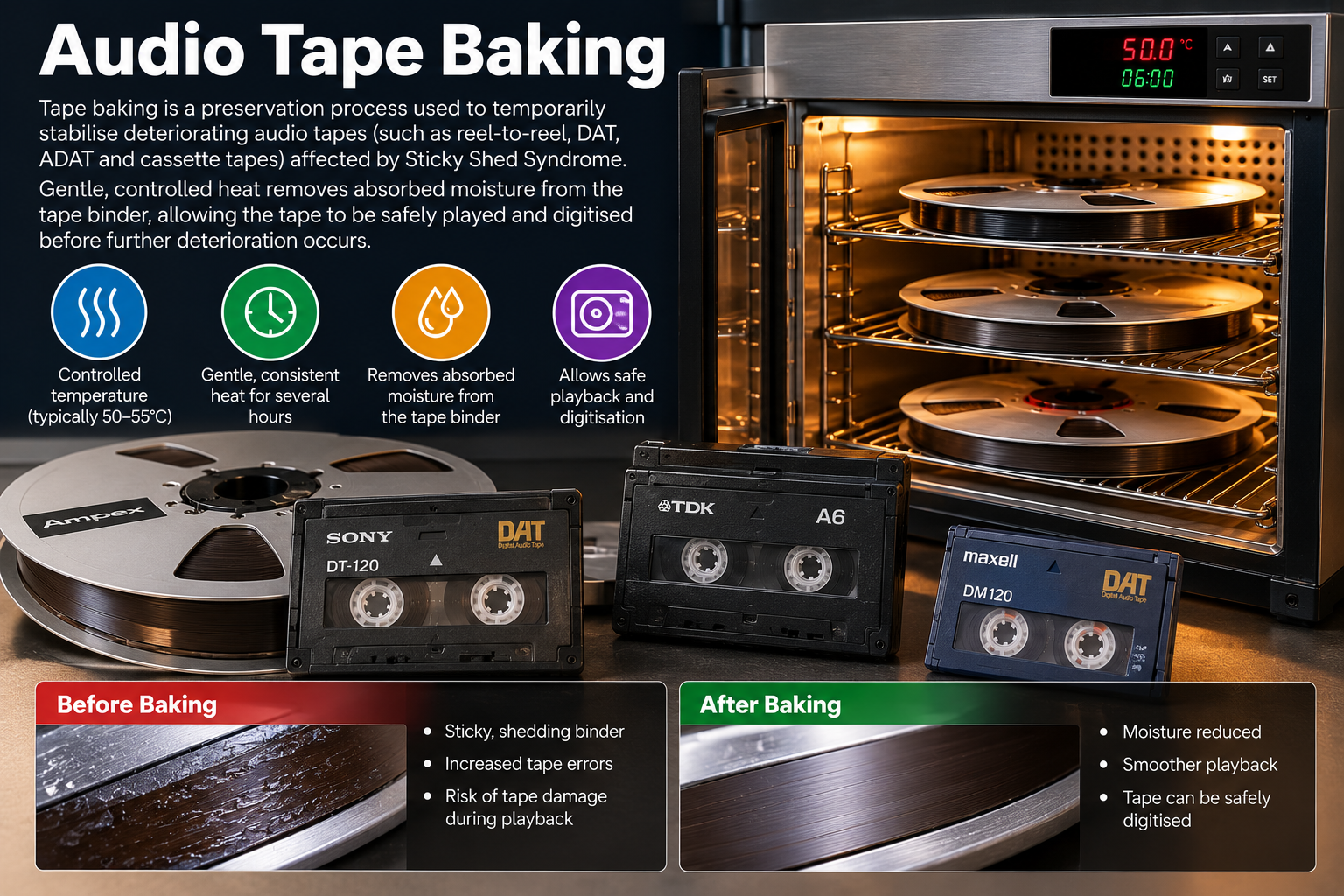
For appropriate tapes affected by binder-related problems, controlled heating may temporarily stabilise the tape enough to allow safe playback and digitisation. Treatment should be assessed and undertaken carefully rather than applied routinely.
Quality control checks that the digital transfer is complete, technically correct and faithful to the original recording.
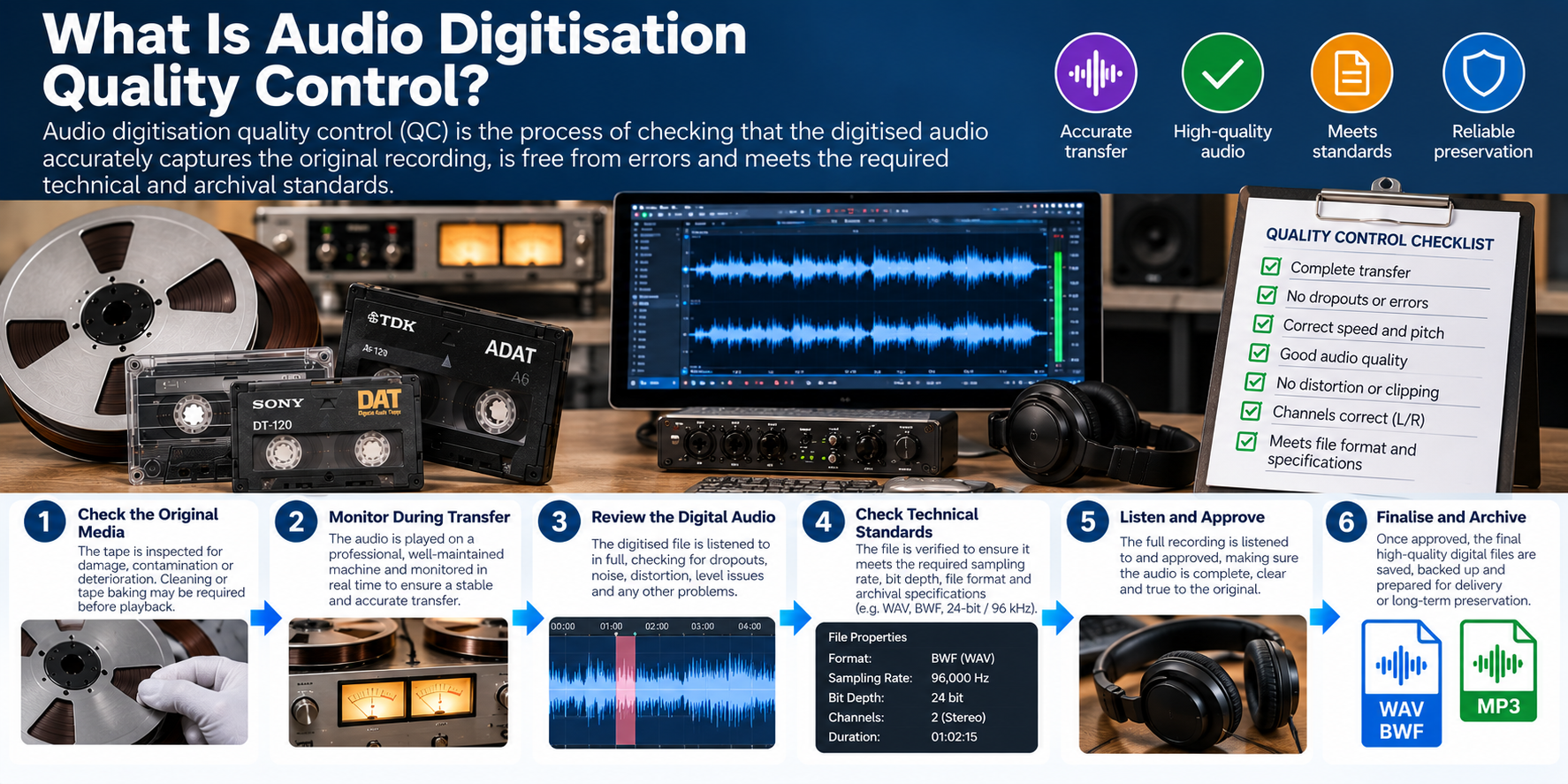
Use the individual guides below when you need a deeper explanation of a particular audio preservation topic.
Understanding a common high-resolution archival capture specification.
How an analogue recording is converted into digital audio.
How bit depth affects amplitude resolution and dynamic range.
Mono, stereo and multichannel recordings explained.
Checks used to verify a reliable and accurate transfer.
Why sampling frequency matters when capturing analogue sound.
Common causes, symptoms and playback risks.
Understanding BWF and its role in professional audio workflows.
Turning a transfer into a sustainable preservation workflow.
When and why controlled tape treatment may be required.
Understanding WAV, uncompressed PCM and preservation files.
How different channel arrangements affect preservation and delivery.
From a single DAT or cassette to large broadcast and heritage collections, we can help identify the media, assess its condition and establish an appropriate digitisation specification.
Discuss Your Audio Collection →