










Negative Photographic Film Scanning | Oxford UK
Archiving and Scanning Digitisation at Oxford Duplication Centre
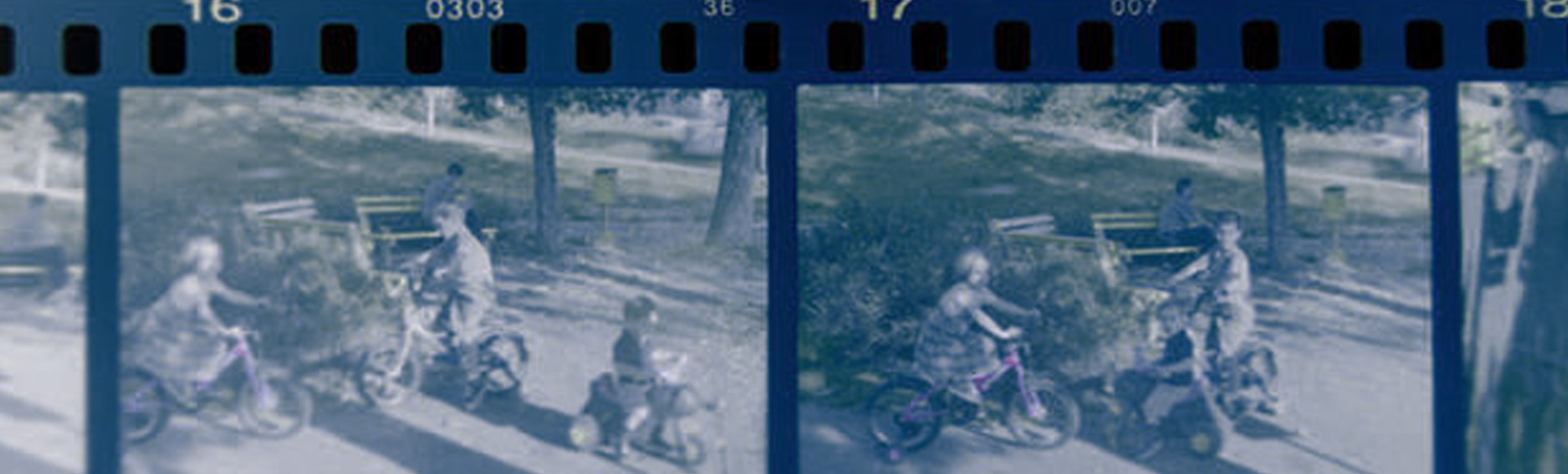
Colour Negative, B/W or Positive Processed Film
135 film, more popularly referred to as 35 mm film or 35 mm, is a format of photographic film used for still photography. It is a film with a film gauge of 35 mm (1.4 in) loaded into a standardized type of magazine – also referred to as a cassette or cartridge – for use in 135 film cameras.
The term 135 was introduced by Kodak in 1934 as a designation for 35 mm film specifically for still photography, perforated with Kodak Standard perforations. It quickly grew in popularity, surpassing 120 film by the late 1960s to become the most popular photographic film size. Despite competition from formats such as 828, 126, 110, and APS, it remains the most popular film size today.
STANDARD FORMAT FILM TYPES: 35mm Slides, 35mm Half Frame, 35mm Negative Strips, 35mm Half Frame Negative Strips,
3D Stereo Slides, 126 film mounts, 127 Superslides, 126 Negative Strips. Please note: 110mm Slides and Negatives, due to very low grain must be digitised to Publication TIFF, before converting to JPEG. |
||||||||
| Digitising Price Per Unit | Output Format | 1+ | 10+ | 50+ | 100+ | 500+ | 1000+ | 5000+ |
| Standard Scanning | JPEG 4800dpi | 2.00 | 1.00 | 0.50 | 0.45 | 0.40 | 0.35 | 0.30 |
| Publication Scanning | TIFF/RAW 3200dpi | 4.00 | 2.00 | 1.00 | 0.75 | 0.65 | 0.55 | 0.50 |
| Archival Scanning | TIFF/RAW 4800dpi | 6.00 | 3.00 | 1.50 | 1.25 | 1.00 | 0.75 | 0.75 |
126 Negative Strips