
Family and personal history
Preserve music, spoken messages and recordings passed through generations, making them easier to share with family members without repeatedly handling the original.
Preserving the voices, music, performances and family histories held on fragile 78rpm records.
Oxford Duplication Centre digitises individual shellac records and larger family, heritage, corporate and archival collections. We combine careful handling, suitable playback equipment and high-quality audio capture to help make historic recordings accessible while reducing the need to handle original discs.
Discuss your records Call 01865 457000
78rpm records are an important part of the history of recorded sound. They can contain early commercial music, dance bands, classical performances, speeches, comedy, oral history, local recordings and treasured family voices. Many were produced before modern tape recording became widespread, and for some collections the original disc may be the only surviving source.
At Oxford Duplication Centre, we understand that these records are not simply old versions of modern vinyl. Shellac discs are rigid and brittle, have different groove characteristics from LPs and may have accumulated decades of dust, wear, scratches or damage. The right approach depends on the condition of the disc, its groove, the recording and what the client needs from the digital files.

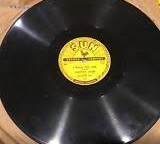
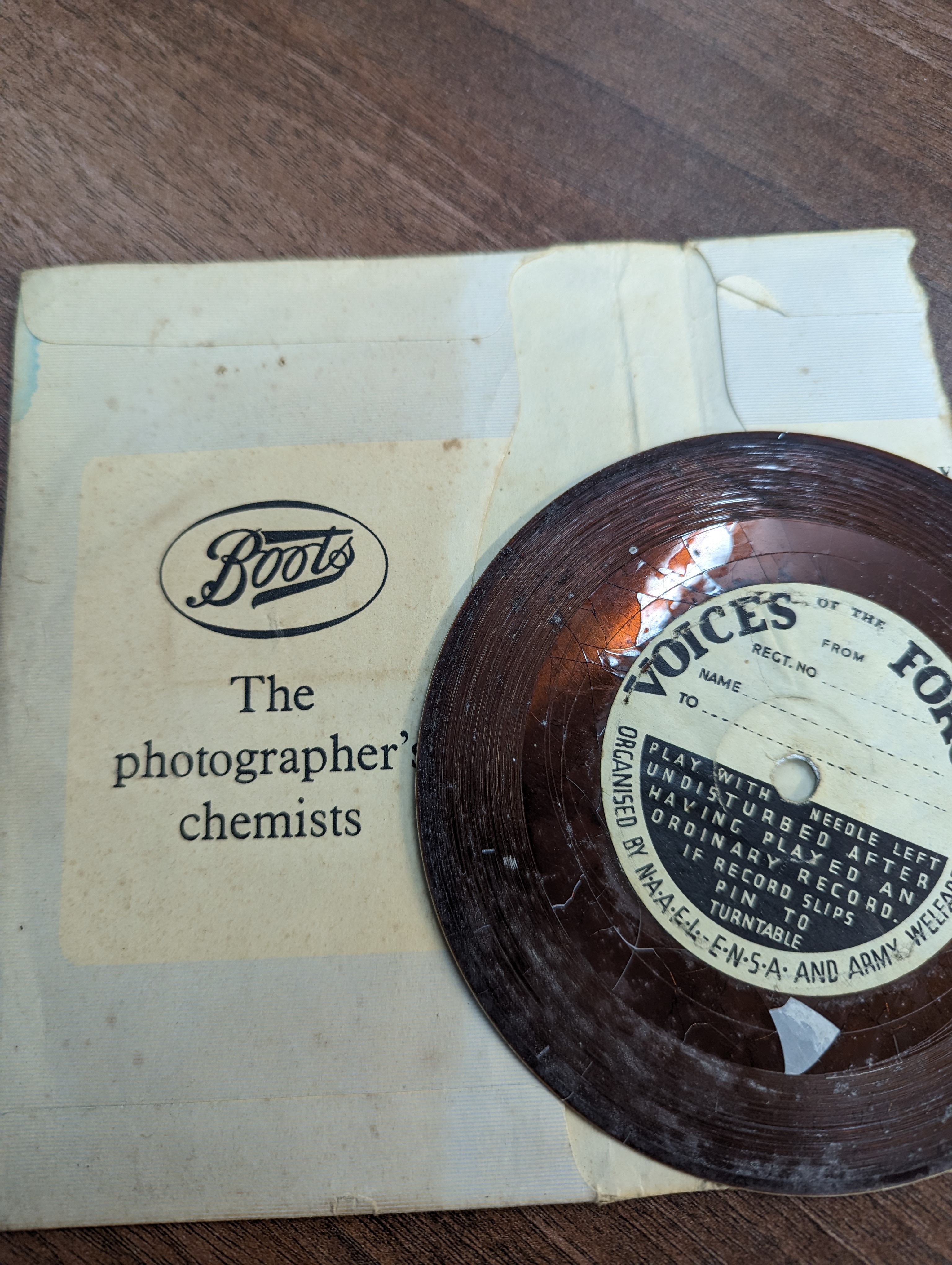
The term “78” is commonly used for the coarse-groove disc records that were widely produced in the early and mid-twentieth century. Many are made from a shellac-based compound mixed with mineral fillers and other ingredients. Ten-inch records are especially familiar, but 78rpm discs can be found in different sizes, and not every historic disc is necessarily shellac or intended to play at exactly 78 revolutions per minute.
Record labels, catalogue numbers, matrix numbers, inscriptions and packaging can help identify the recording and provide valuable historical context. Some discs are commercial releases; others may be private recordings, unusual pressings or part of a specialist collection. Where the format or speed is uncertain, it is best to assess the item rather than rely on appearance alone.
Preserve music, spoken messages and recordings passed through generations, making them easier to share with family members without repeatedly handling the original.
Support cataloguing, local history, exhibitions, scholarship and collection access with digital copies and useful information about the source disc.
Give careful attention to uncommon pressings, historical performances, private recordings and discs whose significance may not be obvious from the label alone.
Shellac is brittle and does not flex like modern vinyl. A disc can chip at the edge, crack through the playing surface or break if unsupported. Dirt and abrasive particles can also damage the groove during playback, while a worn or unsuitable stylus can increase noise and wear. For these reasons, cleaning and playback should be appropriate to the disc's material and condition.
| Issue | What it can mean | Our preservation-minded approach |
|---|---|---|
| Brittleness, chips and cracks | Shellac discs can fracture under bending, impact or uneven support. | Handle carefully by the edge and label area, support the disc and assess visible damage before playback. |
| Dust and surface contamination | Particles in the groove can cause noise and may contribute to wear. | Assess the surface before cleaning; avoid abrasive cloths, household cleaners and improvised treatments. |
| Scratches and groove wear | Previous playback or damage may affect clarity and intelligibility. | Use suitable playback arrangements and discuss optional restoration where useful. Restoration cannot recreate information that is no longer present in the groove. |
| Incorrect speed or stylus | A record played at the wrong speed may sound too high, too low or otherwise unnatural; groove dimensions vary. | Consider label information, disc characteristics and the intended sound when selecting playback speed and stylus. |
| Confusion with lacquer or acetate discs | Some discs that look similar have a different construction and may be much more vulnerable to deterioration. | Identify unusual or fragile discs before applying routine shellac-record handling or cleaning methods. |
| Labels and handwritten notes | Dates, names, catalogue references and inscriptions may be essential to understanding the recording. | Preserve accompanying sleeves and paperwork and record available details as part of the collection context. |
We aim to create a useful, high-quality digital representation of each recording while treating the physical original with care. The process is tailored to the condition and requirements of the collection.
We discuss the number of records, sizes, known titles, condition, deadlines and intended use. Photographs or a list can help identify unusual material before it arrives.
We look for cracks, chips, warping, surface contamination and signs that an item may be a different type of disc. Damaged or uncertain items may need special consideration before playback.
Records are played using professional record-deck equipment and a suitable cartridge/stylus arrangement. Playback choices are made with the source material in mind rather than assuming every disc is identical.
The analogue signal is captured digitally. We can discuss uncompressed preservation files and separate listening copies to match your archive, research or family requirements.
Where requested, software-based processing can help reduce some clicks, pops and crackle. We can discuss whether a cleaned-up access copy is useful alongside an unprocessed transfer.
Files can be arranged by title, side, catalogue reference or collection. Useful label details and supplied documentation can help make the resulting archive easier to navigate.
We offer digital audio outputs including WAV, Broadcast WAV (BWF), AIFF, MP3 and CD, with specifications agreed to suit the project. For preservation workflows, an uncompressed master is generally preferable to relying solely on a compressed listening file.
| Output | Best suited to | Notes |
|---|---|---|
| WAV / BWF | High-quality master and archive workflows | Uncompressed PCM audio; BWF may support embedded metadata. Sampling rate and bit depth can be agreed to meet your requirements. |
| AIFF | High-quality audio delivery | An uncompressed option for workflows that specify AIFF. |
| MP3 | Convenient access and sharing | Compact and widely compatible, but compressed; use alongside rather than instead of a preservation master when long-term preservation is required. |
| Audio CD | Simple playback on compatible CD players | CD audio uses 16-bit, 44.1kHz audio. |
For larger archive projects, we can discuss file naming, track or side splits, metadata, quality-control checks and the distinction between preservation masters and listening copies.
Historic shellac records often contain surface noise, clicks, pops and crackle. Digital restoration can sometimes reduce distracting noise and make a recording easier to listen to, but it should be applied thoughtfully: aggressive processing may remove musical detail, soften consonants or alter the character of the original performance.
A high-quality capture intended to retain the sound of the source as faithfully as practicable, without unnecessary processing.
An optional processed version to help reduce selected clicks, pops and surface noise for everyday listening or access.
Where both versions are required, label them clearly so future users can distinguish the preservation master from the restored access file.
For a quotation, let us know approximately how many records you have, whether you need files per side or per track, your preferred output formats and whether you would like optional restoration. If you are unsure what type of disc you have, photographs of the label and overall record can help us advise you.
Yes. We can discuss single records as well as larger family, corporate, heritage and archival collections.
Not necessarily. “78rpm” is a common format description, but historical recordings and discs can vary. Where information is available, label markings and recording characteristics should be considered rather than assuming the speed from appearance alone.
Optional digital restoration can reduce some surface noise, clicks and pops. Results depend on the source and condition, and processing should be balanced against preserving musical or spoken detail.
Please tell us before sending it and do not attempt repairs yourself. We can discuss its condition and whether a safe transfer may be possible.
No, not necessarily. Conventional shellac 78s are often smaller pressed records, while 16-inch transcription discs may be lacquer-coated instantaneous recordings with different materials and preservation risks. If you have large broadcast discs, see our dedicated 16-inch transcription disc digitisation page.
Large-format broadcast and radio discs may need a different assessment from conventional shellac records.
Instantaneous discs can be vulnerable to cracking, coating loss and chemical deterioration. Do not treat them as ordinary shellac records.
Digitisation for LPs, EPs and singles with file formats selected for listening or preservation requirements.