Broadcast heritage · Recorded sound preservation
16-Inch Transcription Disc Digitisation
Preserving the voices, music, news and programmes captured on historic 16-inch transcription discs and other large-format instantaneous recordings.
Oxford Duplication Centre provides specialist digitisation for fragile broadcast discs, radio transcription records, lacquer-coated instantaneous discs and related archive collections. Every project begins with identifying the format and assessing the condition of the original.
Discuss your collection
Call 01865 457000
What are 16-inch transcription discs?
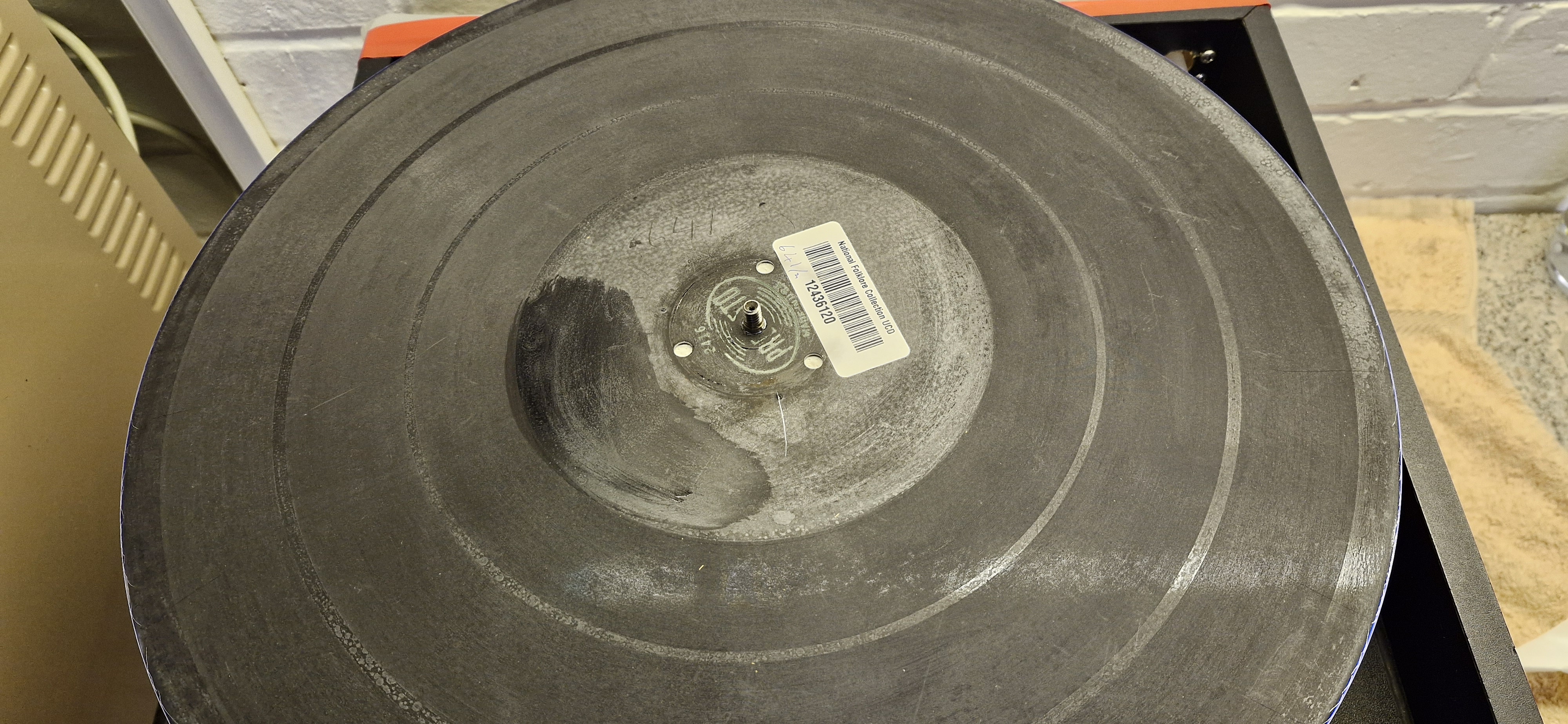
Sixteen-inch transcription discs are oversized grooved sound recordings associated particularly with radio broadcasting, programme distribution, studio production and institutional sound archives. Their large diameter helped accommodate long-form material compared with conventional consumer records. Depending on the recording and its purpose, discs may be encountered at 33⅓ rpm or 78 rpm; the correct speed must be established for each item rather than assumed from its size alone.
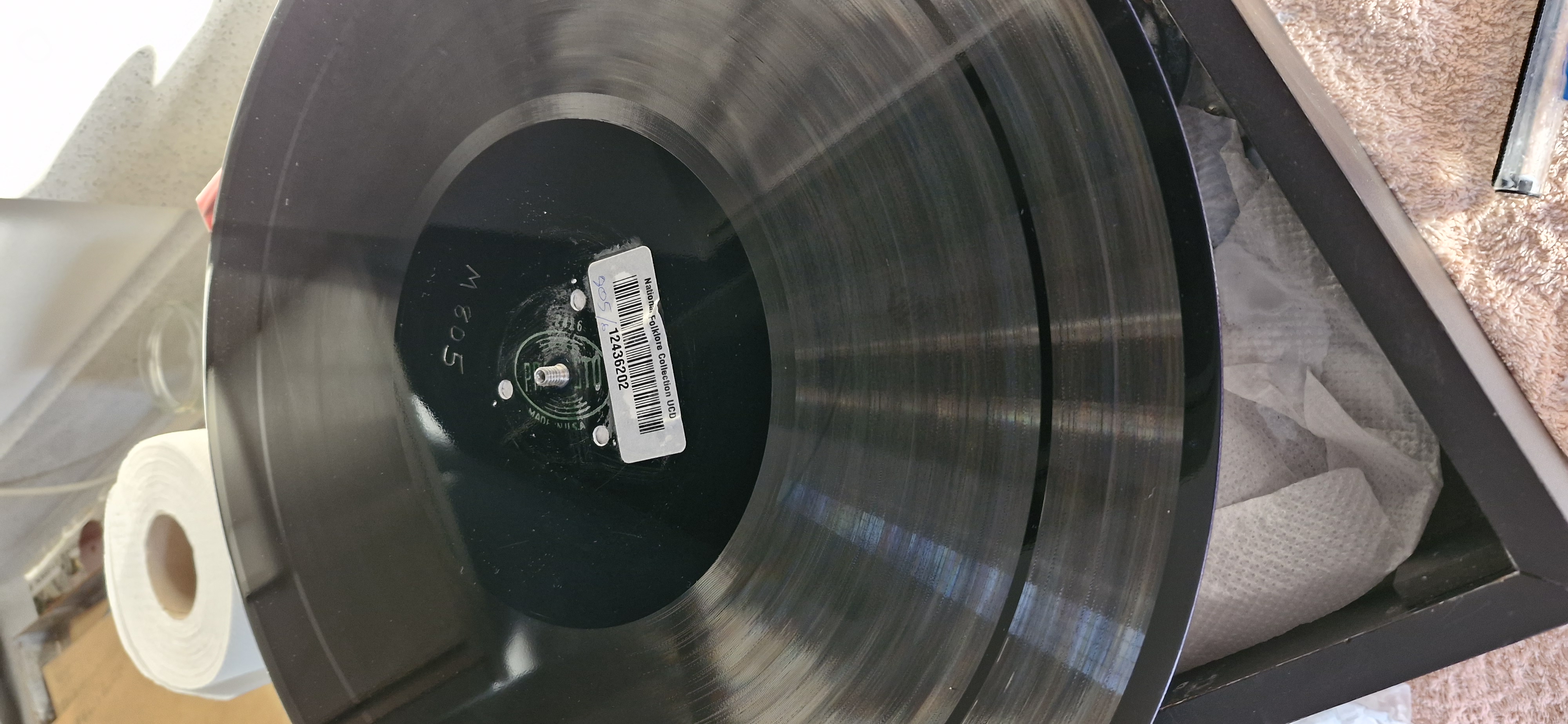
Some discs were pressed or duplicated for distribution, while others are instantaneous recordings: audio cut directly into a lacquer coating on a supporting base. These are often informally called “acetates”, although the term can be misleading because the disc is not necessarily made from solid acetate. The base may be aluminium, glass or another material, with a lacquer layer carrying the groove. Glass-based discs are particularly vulnerable to catastrophic breakage.
Large-format transcription discs can contain radio news, speeches, interviews, live performances, orchestral and jazz music, public information, wartime broadcasts, local radio programmes and recordings made for internal station use. A single disc may be an important primary source, especially when no other copy of the programme survives.
Important distinction: “16-inch” describes the disc diameter, not the playback speed or material. A 16-inch disc is not automatically a 78rpm record, and not every disc that looks like an acetate is constructed in the same way. Correct identification is part of safe transfer.
Explore the discs and equipment
Why these recordings matter
Radio and broadcast history
Transcription discs can preserve programmes, station output, news bulletins and live coverage. They may include off-air material, commentary, interviews and local or regional broadcasts that are absent from published catalogues.
Unique performances
Some discs hold one-off concerts, rehearsals, speeches or performances. A fragile original may be the only surviving source, making careful handling and a documented transfer especially important.
Research and access
Digital files allow researchers to listen without repeatedly handling the original disc. They can support cataloguing, transcription, education, exhibition, oral history and responsible access for future users.
Materials and construction: not all transcription discs are alike
Appearance alone is not enough to identify a disc safely. Historical recording media used different substrates, coatings and manufacturing methods, and collections may contain more than one type. The condition and construction determine how a disc should be supported, cleaned and played.
| Disc type or construction | What to look for | Preservation considerations |
|---|
| Lacquer-coated instantaneous disc | A dark grooved coating on a supporting core; may be labelled “recording”, “transcription” or with a station/date. | The coating can shrink, crack, bubble or separate from its base. White or greasy deposits can indicate deterioration; avoid routine cleaning or playback until assessed. |
| Aluminium-core lacquer disc | Metal core visible at the edge or where coating has been lost. | Coating loss exposes the base and may leave grooves incomplete. Do not scrape or polish the surface. |
| Glass-core lacquer disc | May appear similar to other lacquer discs; the substrate may not be obvious without careful examination. | Extremely fragile if cracked or broken. Support the disc fully and do not flex, lift by a damaged edge or attempt playback without specialist assessment. |
| Shellac or pressed disc | Rigid, relatively thick disc; often associated with conventional 78rpm records, though diameter and format vary. | Can be brittle and prone to chips or cracks. Groove size and suitable stylus may differ from later vinyl formats. |
| Other or uncertain media | Unusual substrate, unusual hole pattern, handwritten notes or unclear label information. | Do not infer material or speed from diameter alone. Identify the disc before selecting cleaning or playback methods. |
Common deterioration and playback risks
Delamination and flaking
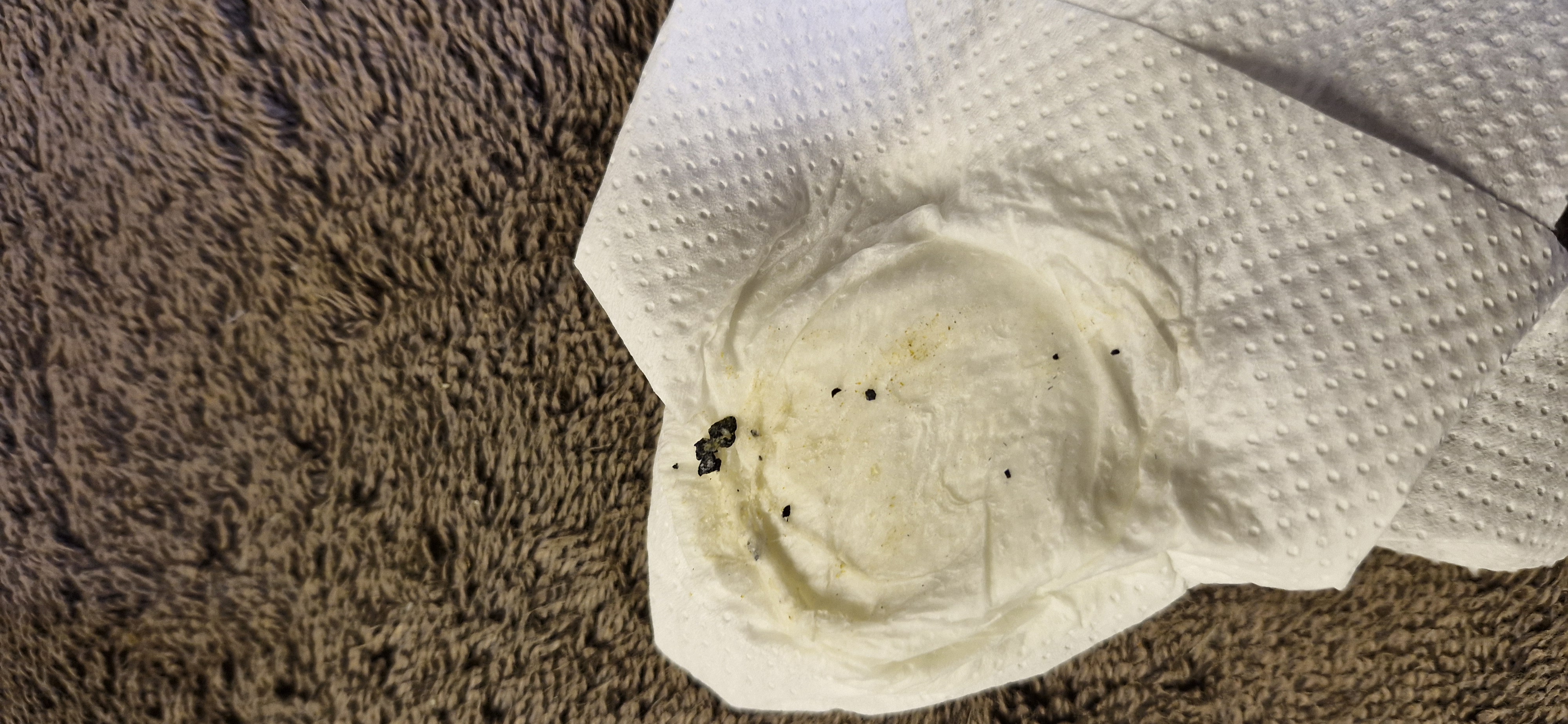
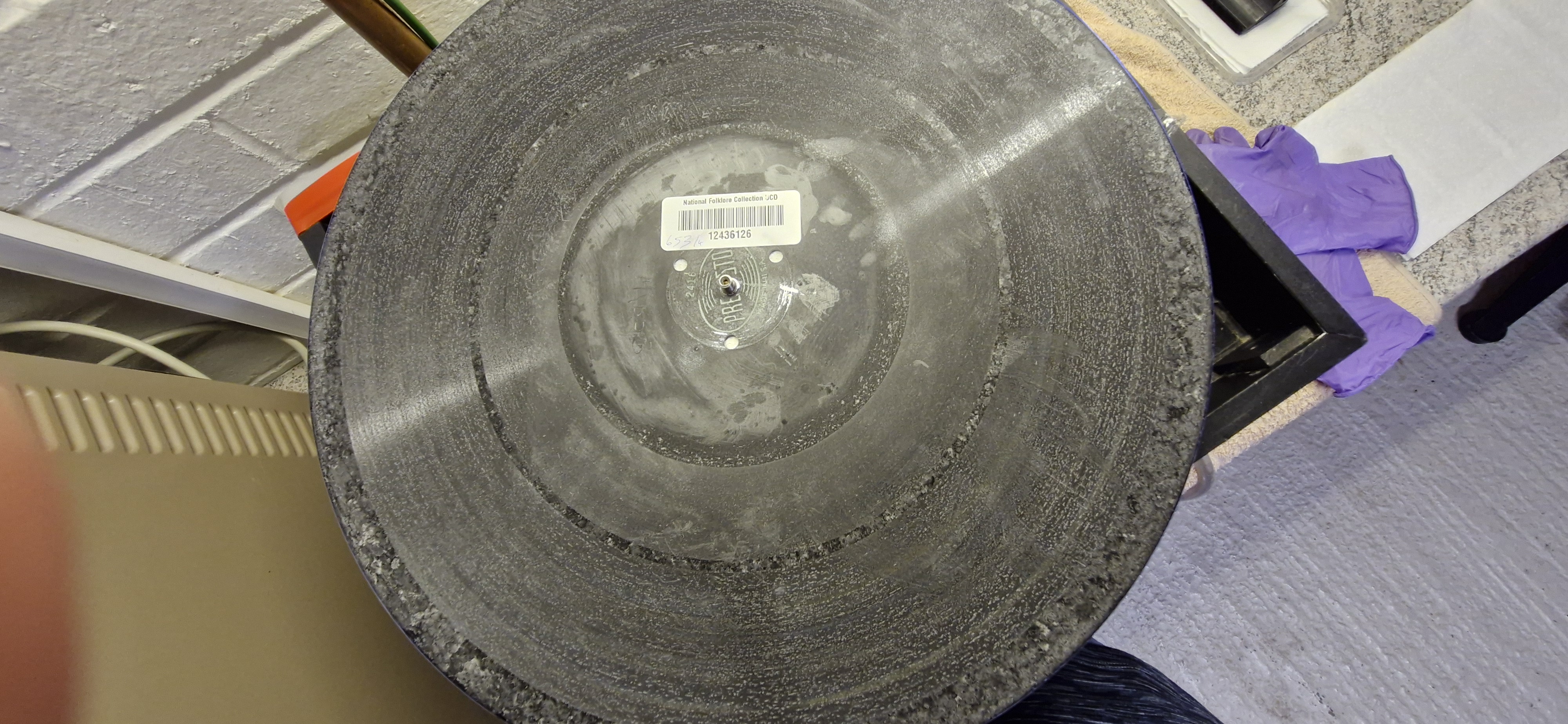
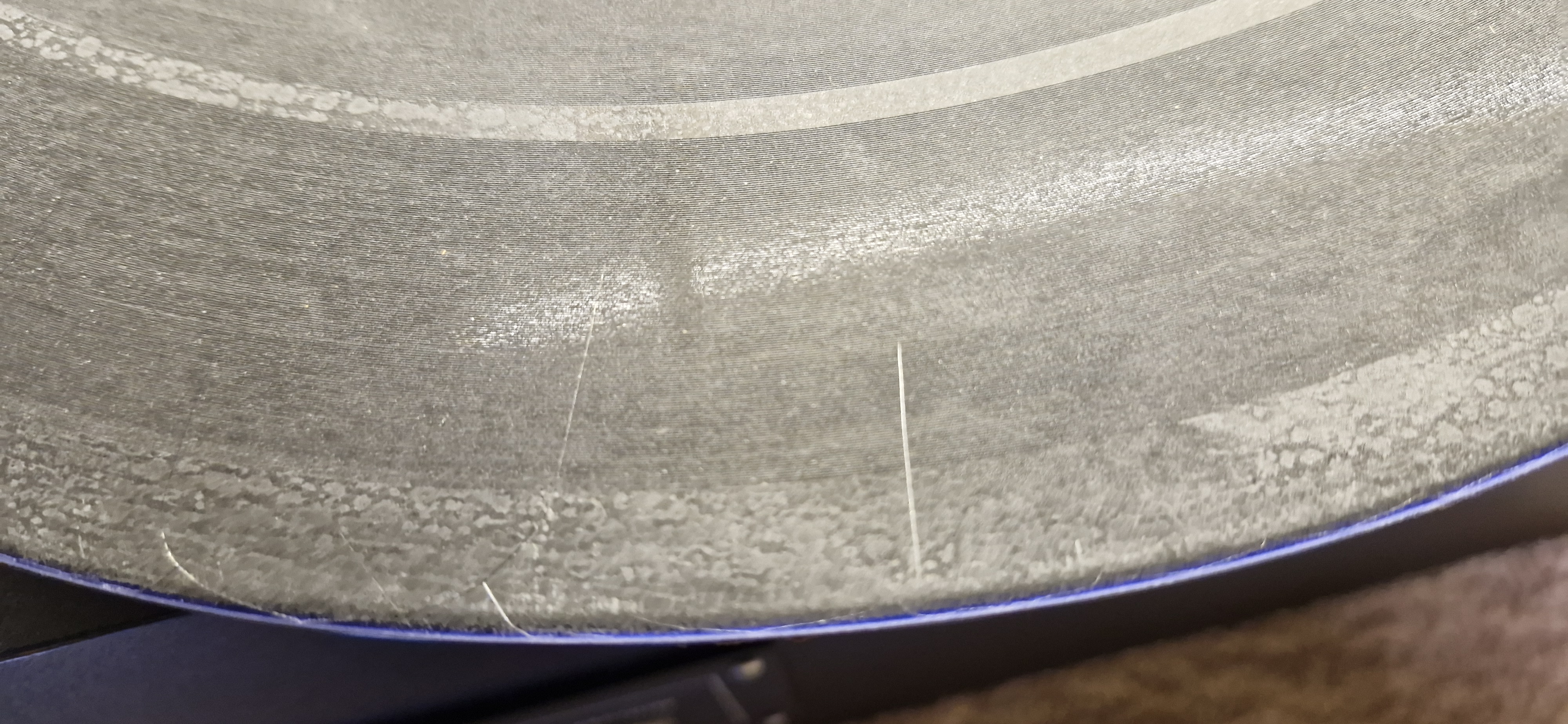
The lacquer layer may shrink and detach from its core. Raised edges, bubbles, cracks or missing areas are warning signs. A stylus can catch loose material and cause further loss.
White or oily deposits
A pale, waxy or greasy film can be associated with chemical deterioration and migrating plasticiser. It should not automatically be treated as ordinary dust or wiped away with household products.
Cracks and glass breakage
Cracks can spread when a disc is lifted, flexed or clamped. Glass-core discs can break suddenly and may be unsafe to handle without a support tray.
Groove wear and scratches
Previous playback, worn or incorrect styli, dirt and scratches can reduce intelligibility. The most suitable stylus size and tracking arrangement depend on the groove and condition.
Warping and storage damage
Heat, pressure, poor shelving and uneven support can distort or damage discs. Oversized records need suitable sleeves and storage that supports them without stress.
Labels and annotations
Labels, handwritten notes, dates and matrix markings may be valuable evidence. Liquids, adhesive removal and careless handling can destroy information that helps identify the recording.
Our preservation-led digitisation approach
Every collection is different. Our approach is to identify the format, assess visible condition and choose a suitable transfer method rather than treating all 16-inch discs as ordinary shellac records. Where the disc is unstable, its physical condition takes priority over obtaining a conventional playback.
1. Initial identification
We review the diameter, label, inscriptions, apparent construction, speed markings and any accompanying documentation. We record uncertainties rather than making assumptions about the substrate or recording speed.
2. Condition assessment
Visible cracks, coating loss, delamination, residue, warping and other risks are considered before the disc is handled further. Damaged originals may need to be excluded from normal playback pending assessment.
3. Appropriate playback
Where condition permits, playback is selected to suit the disc, including the correct speed and an appropriate stylus. The aim is to minimise unnecessary handling and avoid forcing a stylus through damaged grooves.
4. High-quality capture
The analogue signal is captured as a digital audio file suitable for preservation and access. Transfer notes can help document the source, playback choices and any audible or physical limitations.
5. File delivery
Output requirements can be agreed to suit your archive, research or access needs. Uncompressed WAV/BWF can be used for preservation workflows, with MP3 or other access copies where required.
6. Context and metadata
Disc labels, catalogue references, dates, station names, programme titles and side information should be recorded where available. Useful metadata helps make files searchable and reduces the risk of losing context.
Digital audio files for archives and researchers
We can discuss file formats and delivery requirements before work begins. For preservation projects, an uncompressed, well-documented master is generally preferable to relying solely on a compressed listening copy. A practical delivery may include a preservation master and a separate access file, with consistent file naming and collection-level metadata agreed in advance.
| File type | Typical role | Notes |
|---|
| WAV / BWF | Preservation master or high-quality working master | Uncompressed PCM audio; BWF can carry useful embedded metadata. Sampling rate and bit depth should be agreed against the project's preservation specification. |
| AIFF | High-quality uncompressed audio | Can be suitable where required by a client workflow or production environment. |
| MP3 | Convenient listening and sharing copy | Lossy compression makes it useful for access, but it should not replace the preservation master. |
For archive projects, we can discuss delivery structure, file naming, side-by-side or track-based splits, metadata, quality-control checks and the distinction between a preservation master and a convenient listening copy. The correct approach depends on the source, the intended use and the archive's own specification.
Preparing a collection for digitisation
- Keep each disc in its existing sleeve or protective housing until advised otherwise.
- Handle by the edge and label area only; avoid touching the grooved surface.
- Do not stack large discs horizontally or place weight on them.
- Do not clean, polish, apply liquids or try to flatten a warped disc.
- Keep broken or visibly flaking discs supported and clearly identified; do not lift a cracked glass disc unsupported.
- Keep any original paperwork, sleeves, cue sheets, labels and catalogue lists with the relevant disc.
- If possible, provide a list of titles, station or organisation names, dates, side numbers and known playback speeds.
We welcome single items as well as larger collections from broadcasters, museums, libraries, universities, local-history groups, researchers, businesses and private owners. If you are unsure whether a disc is a 16-inch transcription disc, a shellac 78, a lacquer instantaneous disc or another format, send us a description and photographs of the front, label and edge.
Frequently asked questions
Are all 16-inch transcription discs recorded at 78rpm?
No. Sixteen inches is the diameter, not the speed. Historical transcription discs may be found at different speeds, including 33⅓ and 78 rpm. The speed should be established from markings, documentation and careful assessment.
Are transcription discs the same as shellac 78s?
Not necessarily. A pressed shellac record and a lacquer-coated instantaneous disc can look similar at a glance but have different construction and preservation risks. A lacquer disc may have a metal, glass or other core with a delicate coating.
Can a disc with white deposits still be digitised?
Possibly, but the deposits may indicate deterioration rather than simple dirt. Do not wipe or wet-clean the surface yourself. Its condition should be assessed before any playback decision is made.
Can a cracked or flaking disc be played?
It should not be placed on a turntable without specialist assessment. Cracks, loose coating and delamination can worsen during handling or playback. The safest option depends on the exact condition and whether a usable transfer can be made without unacceptable risk.
What should I send for a quotation?
Please provide an approximate number of discs, diameter, any known speed or date information, photographs of labels and surfaces, and your preferred file format. Tell us if any discs are cracked, warped, flaking or showing white/oily deposits.
Further preservation guidance
The following institutional resources explain the history, construction and deterioration of grooved recordings:
<