
Large Negatives
Large plate sizes could record exceptional detail and tonal information.
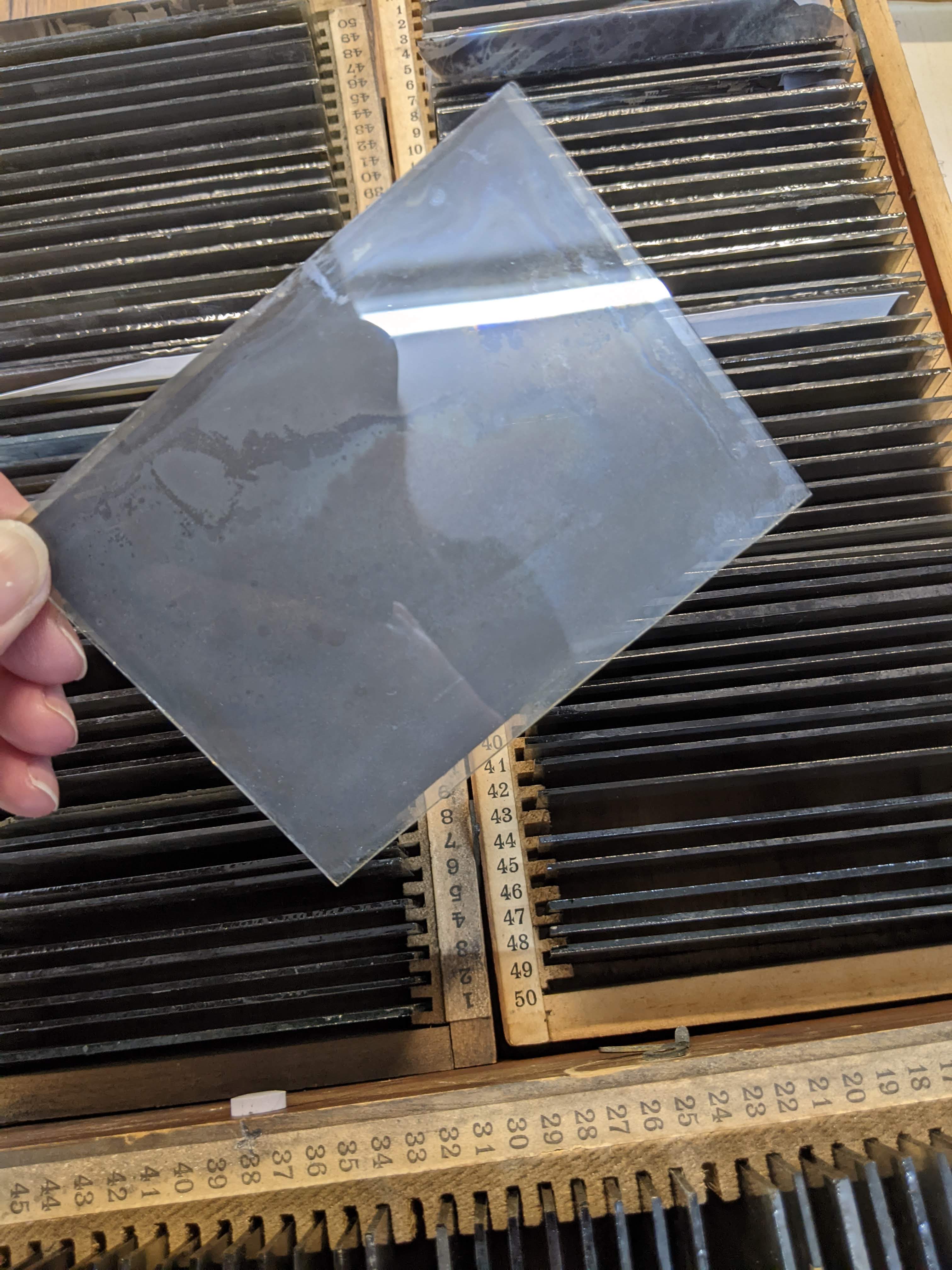
Discover the history of glass plate photography and how fragile original plates can be assessed, digitised and preserved as high-quality digital records.
Glass plate cameras and glass photographic plates represent a pivotal chapter in the history of photography. Before the widespread adoption of flexible film, photographers relied on carefully prepared glass plates to capture remarkably detailed images.
Today, these fragile objects offer an invaluable visual record of people, places, architecture, industry and everyday life. For museums, archives, local history groups, private collectors and families, digitisation can provide a practical way of improving access while reducing unnecessary handling of the original plates.
.jpg)
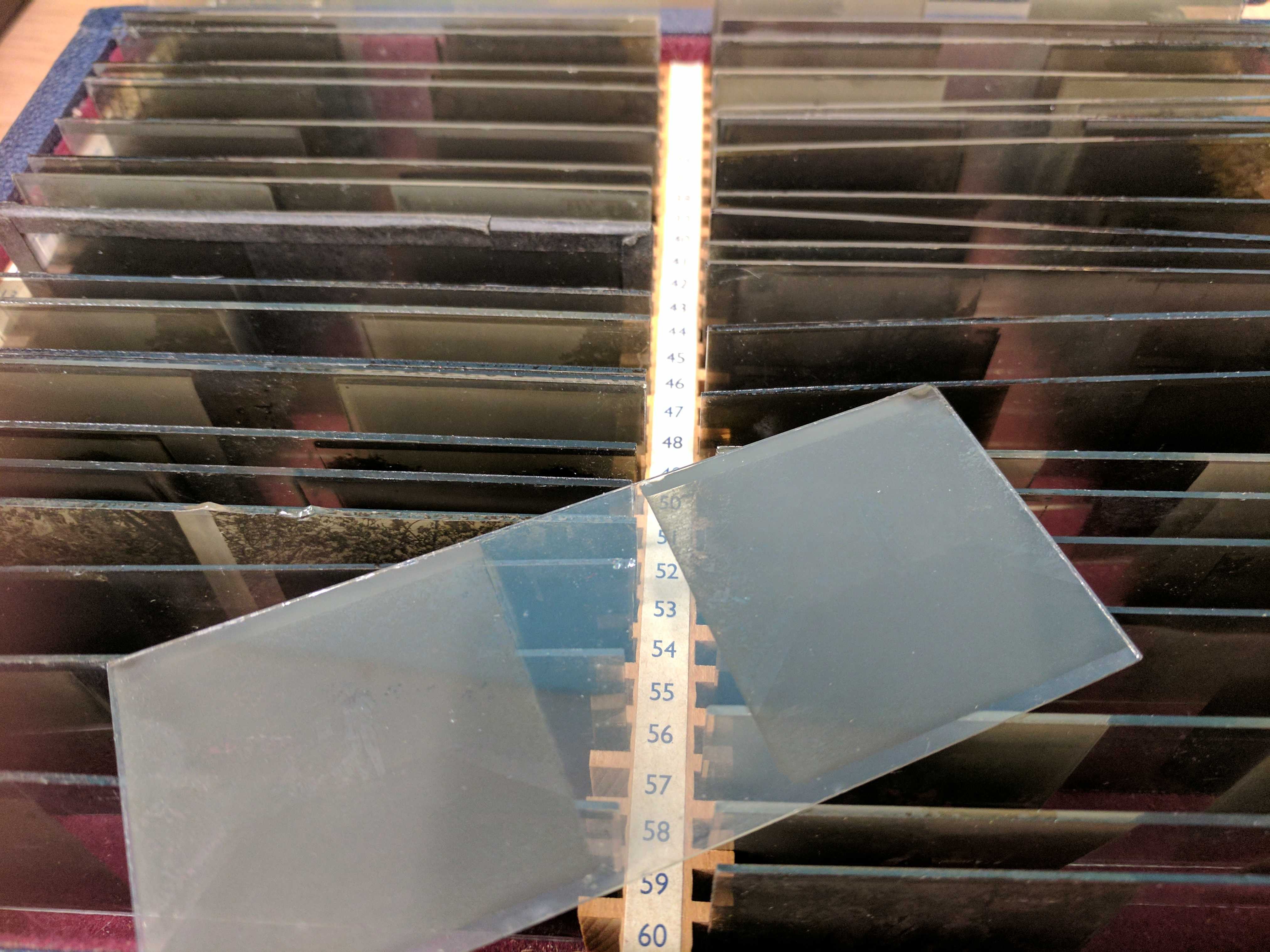
Glass plate cameras were used across many decades—from the early 1850s wet collodion era to the early 1900s dry plate era—and appeared in several distinct designs:
Glass plate cameras were large-format photographic cameras designed to expose individual glass plates coated with a light-sensitive photographic emulsion. Unlike modern cameras using rolls of film or digital sensors, each exposure required a separate prepared plate.
The camera itself could be relatively substantial, particularly where large negatives were required. Photographers used a dark slide or plate holder to protect the sensitised plate from light until it was ready for exposure. The combination of a large negative and the fine detail available from glass made the process particularly valuable for portraiture, architecture, surveying, scientific work and documentary photography.
Large plate sizes could record exceptional detail and tonal information.
Each photograph normally required a separately prepared and loaded plate.
Plates can document communities, buildings, landscapes, industry and family history.
Some of the earliest practical glass plate processes depended on wet collodion. The plate was coated and sensitised shortly before exposure and then processed while still wet. This demanded considerable preparation and meant that photographers often had to work with portable darkroom equipment when working away from a studio.
Dry plate technology later simplified the process. Factory-prepared gelatin dry plates could be purchased ready for use and stored before exposure. This helped photography become more practical and portable, contributing to the expansion of amateur photography, commercial studios, scientific imaging and documentary photography.
A glass plate is more than an old photograph. It may be the surviving original photographic record from which later prints were made. Plates can contain information that is difficult to reproduce from secondary copies, including fine detail, edge information, original framing and subtle tonal differences.
Collections can also contain contextual evidence written on sleeves, envelopes, boxes or storage labels. For this reason, digitisation should be treated as part of a wider collection-management process rather than simply placing a plate on a scanner.
Preparation begins with assessment. Before capture, plates should be inspected for broken glass, cracks, flaking or lifting emulsion, surface dirt, silvering, mould, residue and other signs of deterioration. The condition of the plate determines how it can safely be handled and captured.
Cleaning should never be treated as an automatic part of every digitisation job. Where the photographic image layer is unstable, aggressive cleaning can cause permanent loss. The safest approach is to use an appropriate conservation-led method, with the condition of the original taking priority over cosmetic appearance.
Record the physical condition, dimensions, emulsion stability, damage and any associated labels or housing before handling.
Identify plate type, approximate process, orientation, markings and collection context where this information is available.
Remove only loose or safely removable contamination using methods appropriate to the material and its condition.
Use a suitable high-resolution imaging system, careful positioning and even illumination to record the photographic information.
Check focus, resolution, tonal range, orientation, cropping, completeness and file naming against the agreed project specification.
Create an appropriate preservation master and, where required, access derivatives such as JPEG or PDF for easier viewing and distribution.
For heritage collections, the objective should be to create a digital master that retains as much useful information from the original plate as practical. Resolution, bit depth, tonal range, colour management, file format, metadata and quality assurance should all be considered before production begins.
For image preservation, lossless TIFF is commonly selected as a preservation master format, with JPEG or other derivatives created for access. The exact specification should be agreed for the collection rather than applying a single setting to every plate.
Where a project is intended to align with The National Archives guidance or an institutional preservation policy, the technical specification should be documented in advance. This can include capture resolution, colour mode, file naming, metadata, storage, integrity checking, quality control and delivery requirements.
There is no single universal scanner setting that makes every image “National Archives standard”. A professional archival workflow is based on the characteristics of the original material and the purpose of the digitisation project. The important principle is to establish a documented, repeatable technical specification and apply appropriate quality assurance throughout the project.
For glass plates, this is especially important because the original is often irreplaceable. The digital master should be created to support long-term preservation and future use, while access copies can be optimised for everyday viewing.
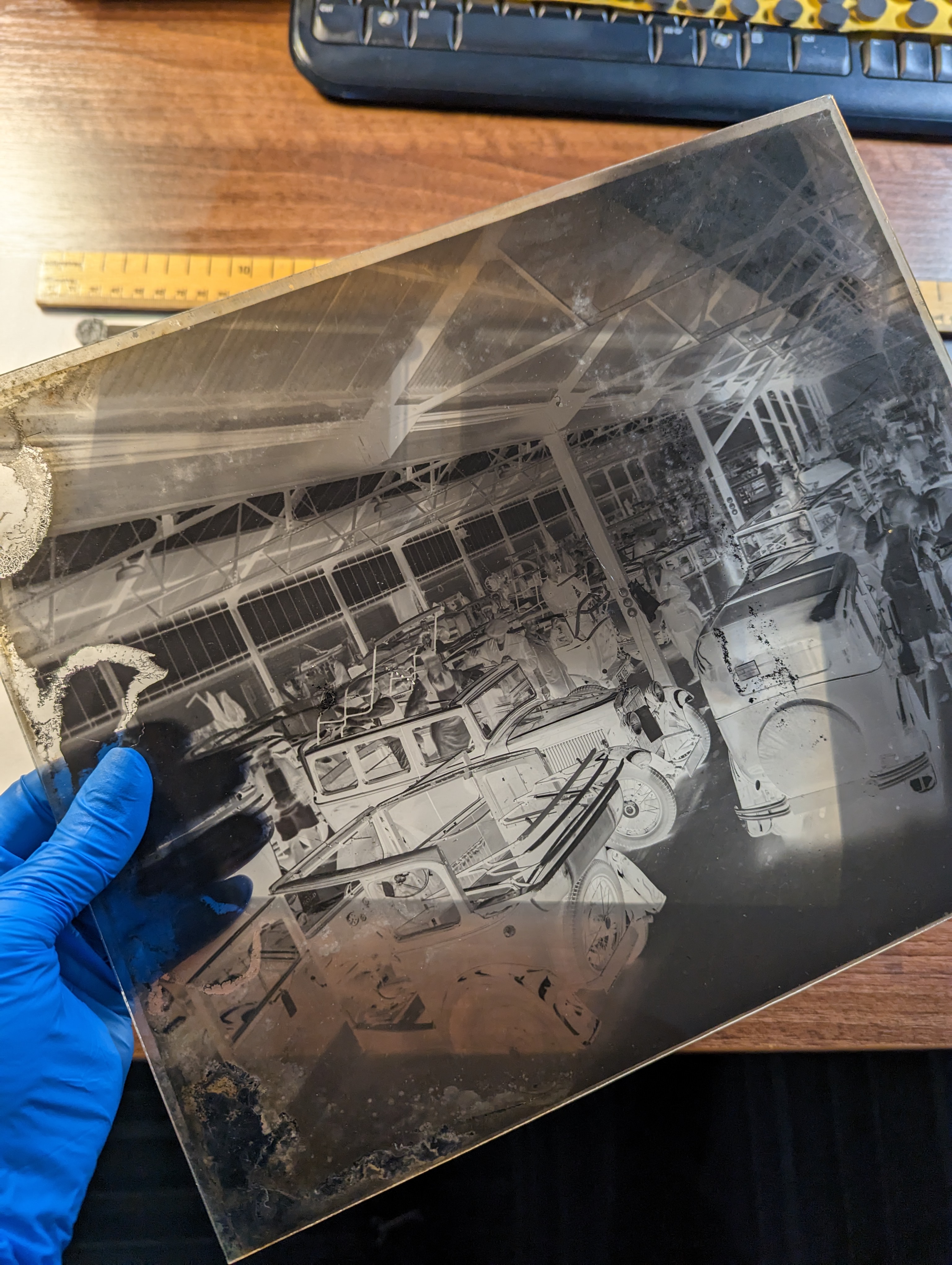
A successful glass plate digitisation project should preserve more than pixels. File names and folder structures should be meaningful and consistent, while descriptive and technical metadata can retain information about the collection, plate identifier, subject, date, photographer, dimensions, capture specification and any known rights information.
Where appropriate, integrity information such as checksums can support verification that digital files have not changed after creation. Preservation also requires suitable storage, backup and management arrangements beyond the initial scanning process.
Some collections include cracked plates, chipped edges, detached emulsion, severe dirt or other damage. These items require additional assessment and may need a specialist capture approach. A damaged plate should never be forced into a holder or subjected to unnecessary pressure simply to obtain a scan.
Where the image layer is fragile, the priority is to avoid further loss. The digitisation method should be adapted to the condition of the object, and conservation advice sought where necessary.
Digitisation makes historic photographic collections substantially easier to search, share, research and publish. Researchers can examine digital surrogates without repeatedly handling the originals, while families and local history groups can make important visual records more accessible to future generations.
For institutions, a well-managed digital collection can also support cataloguing, online exhibitions, publications, education and remote research while helping reduce handling of vulnerable originals.
Oxford Duplication Centre provides specialist heritage and photographic digitisation services for glass plate negatives, lantern slides and other historic photographic materials. We can discuss the condition of your collection, the required digital specification and the most appropriate preservation and access outputs.
Talk to Our Digitisation Team →